
How to Break Down a Turkey Breast the Right Way
Wild turkey gets a bad reputation it doesn't deserve. Ask most people who've eaten it and they'll tell you the same thing — it was tough, stringy, chewy. And they're not wrong about their experience. But the problem almost never starts in the kitchen. It starts at the processing table, and it has a name: silver skin.
A turkey breast is made up of several distinct muscle groups separated by fascia and connective tissue. Leave that stuff in, and it doesn't matter how good your recipe is — someone at the table is going to hit a chewy bite and decide wild turkey isn't for them. Take the time to break it down properly first, and what you're left with is clean, tender meat that holds up to any preparation you want to throw at it.
Here's how to do it.
What You're Working With
Before you start cutting, take a minute to look at the breast. You'll see different muscle groups separated by visible seams — and running through and between those groups is silver skin. It's the thin, shiny, whitish membrane that doesn't break down when you cook it. That's the chewy part. Your job is to find it, follow it, and get it out without wasting the meat around it.
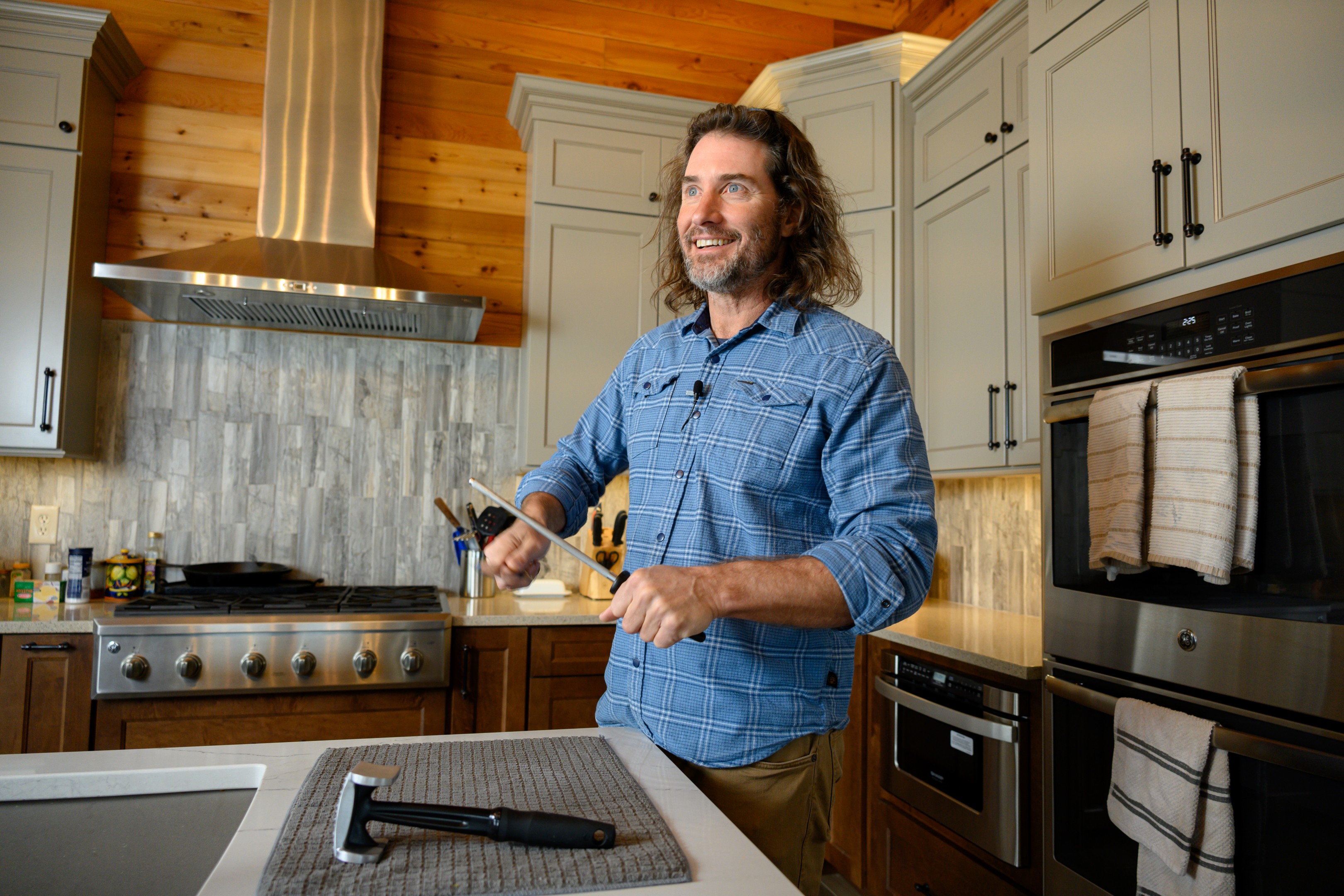
A sharp knife makes this significantly easier. Sharp enough that it wants to cut — not drag. You'll also use a lot of what butchers call blunt dissection: using the blade or your thumb to push and separate rather than slice through. The silver skin has a plane to it. Once you find the edge, you can run along it and peel it away cleanly.
Breaking It Down Step by Step
- Find the seams between muscle groups.
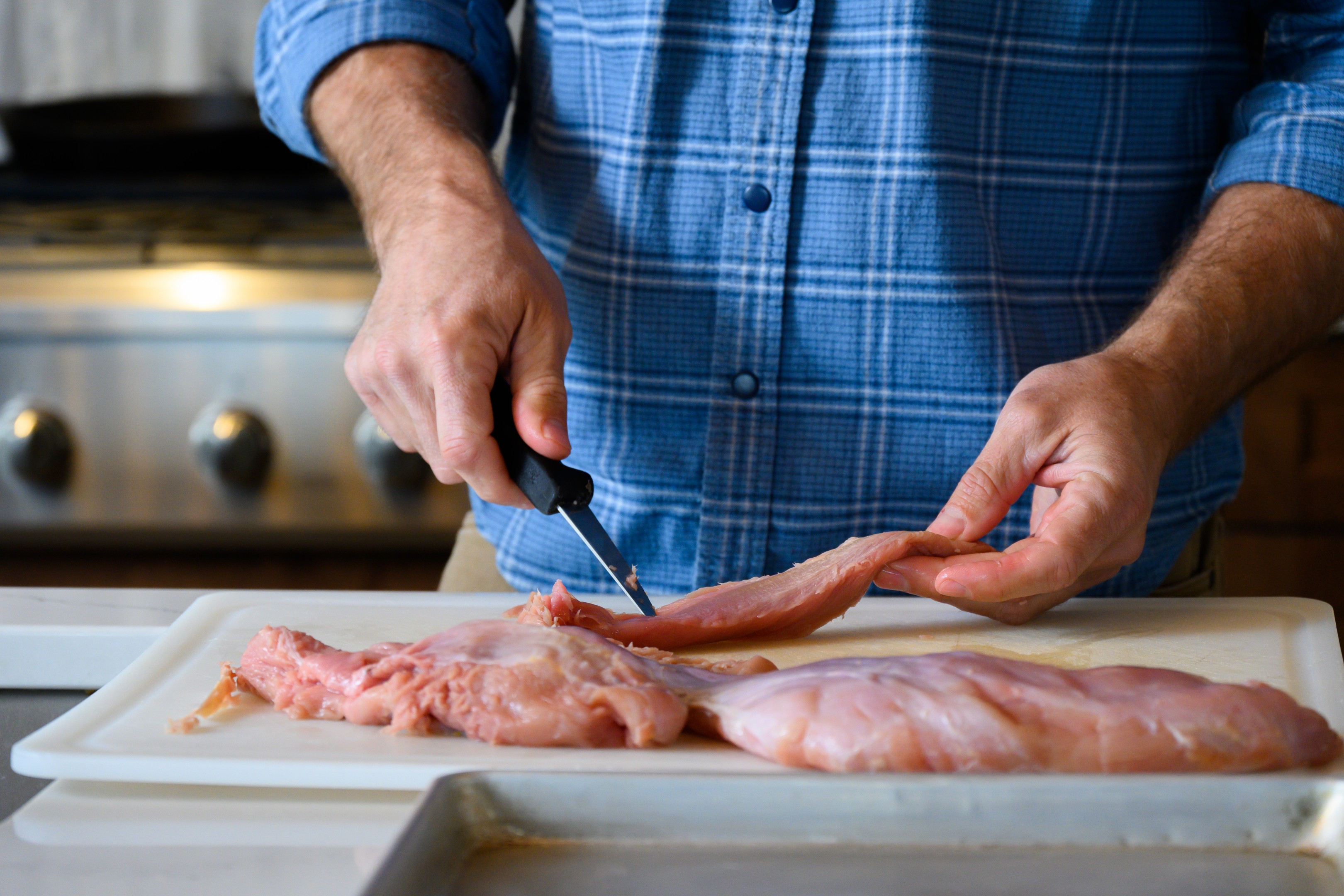
Look at the breast and identify where the muscle groups meet. There's a natural line where the silver skin runs along those boundaries. Start there — get the tip of your knife under the edge of the membrane and lift it just enough to get a grip on it.
- Use your thumb to follow the plane.
Once you've got the silver skin started, run your thumb along the plane between the membrane and the meat. In a lot of cases you can pull it away without cutting at all. Where it resists, use the knife to scrape along the surface — flat blade, not angled down into the meat.
- Work each muscle group separately.
The breast will naturally break into several distinct pieces as you work through it. The main loin, the pec minor, and the inner loin — each one has its own silver skin situation. Some pieces are clean. Others have a significant chunk running right through the middle. Deal with each one on its own terms rather than trying to work the whole breast at once.
- For thick silver skin, cut cross-sections and roll it off.
On pieces with a heavy layer of silver skin on one side, slice the piece in cross-section so the membrane is exposed on a flat surface. Then lay the piece down, hold the silver skin edge, and roll your knife flat along it — the membrane comes right off and you're not taking meat with it.
- Trim any remaining fat, fascia, or pin feathers.
Once the silver skin is out, do a final pass for anything else you wouldn't want on the plate — fat, fascia, any stray feathers you didn't pick during the field prep. What you're left with should be clean, consistent pieces of meat that are uniform enough to cook evenly.
What to Do With the Meat
Once you've broken the breast down properly, you've got clean pieces that are ready for whatever you want to do with them. A few directions worth considering:
- Turkey parmesan. Take one of the larger, more uniform pieces, place it in a vacuum seal bag, and pound it flat. That's your cutlet — bread it, pan fry it, finish it with sauce. It's one of the better ways to cook a wild turkey breast and it's hard to mess up.
- Fried turkey bites. Cube the meat into roughly equal pieces, season, bread, and fry. This is a crowd-pleaser and works well for the smaller irregular pieces that don't lend themselves to a cutlet.
- Vacuum seal and freeze. Clean, silver-skin-free pieces vacuum seal well and hold up in the freezer without texture issues. If you did the processing right, they'll cook just as well in November as they did the week you killed the bird.
The Point
A mature Midwest gobbler is a hard-earned animal. He's survived multiple hunting seasons, spent his whole life being suspicious of everything, and made you work for every inch of the setup. He deserves better than ending up chewy on someone's plate because the processing was rushed.
Take the extra fifteen minutes at the processing table. Get the silver skin out. The people you feed it to will tell you wild turkey is the best thing they've ever eaten — and they'll be right.
At Trophy Properties and Auction, we work with landowners and buyers across the Midwest who take their land — and what lives on it — seriously. Whether you're managing for turkeys, whitetails, or the long-term value of exceptional ground, we're here to help.
 RSS Feed